From Farm to Table: See How Caprilat Reaches You
Do you know where Caprilat goat milk comes from and how it reaches you?
Getting to know each step of the process helps you understand why the product on your table is nutritious, safe to drink, and high-quality.
Food production technology has advanced considerably in recent years, but one thing hasn't changed: the best finished product starts with the best ingredients.
Read on to learn more about the journey our goat milk takes from the farms where it comes from to our processing plant.
The Farms: Where the Magic Begins
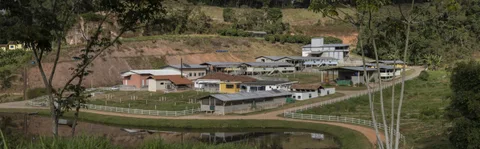
Caprilat goat milk is collected from forty farms in the Zona da Mata region of Minas Gerais. One of them is Vale das Amaltheias, which belongs to Capriana. Like our other farmers, the team there is a true partner and shares Caprilat's passion for what they do.
A Shared Commitment to Animal Welfare
All our partners share Caprilat's commitment to treating goats with respect and looking after their welfare to provide milk of the highest quality.
We believe all animals should be treated humanely, and we know that good milk starts with putting the health and welfare of our dairy goats first.
Goats are naturally social animals, so we encourage our farmers to keep them together in suitable facilities where they can express their natural behaviors.
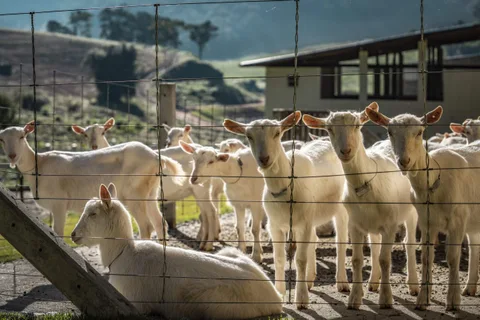
Their housing is well ventilated, protects them from extreme heat, cold, and rain, and meets high standards of hygiene. During the day, they have plenty of space to roam on the farms, with free access to indoor and outdoor areas.
To ensure that quality and animal welfare standards are met, trained dairy goat specialists visit the farms regularly.
The Goats: The Stars of the Show
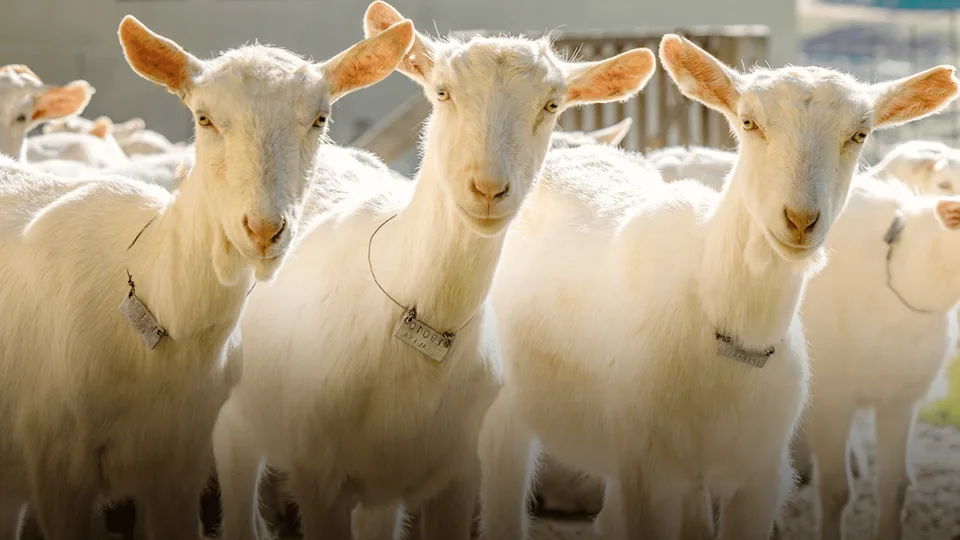
We work with breeds suited to milk production, such as Saanen and Brown Alpine goats.
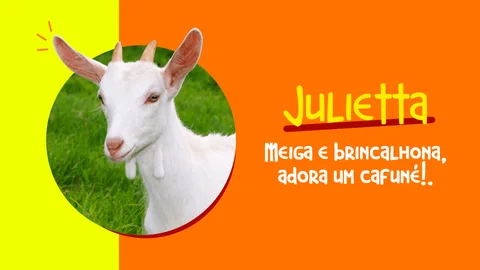
SAANEN – Known as one of the world's most productive dairy goat breeds, the Saanen comes from Switzerland, specifically the Saanen Valley in the southern part of the canton of Bern. Like Julietta, these goats have short white coats and stand out for their large size.
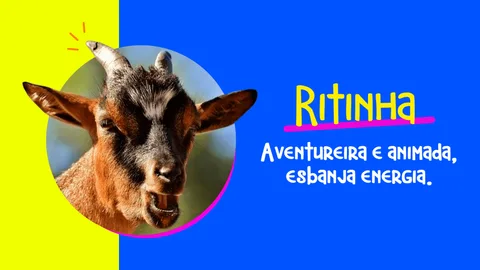
BROWN ALPINE – Ritinha is a Brown Alpine. Another high-yielding dairy breed, the Brown Alpine comes from the French and Swiss Alps. Its coat is short and brown, ranging from grayish brown to dark reddish brown.
Our goats eat a balanced, nutrient-rich diet of suitable feed and silage, such as corn silage. We do not use antibiotics, animal by-products, preservatives, or hormones to boost milk production.
The goats produce more milk thanks to a combination of factors that Caprilat and its partners pay close attention to: a comfortable environment and temperature, a balanced diet, herd health management, and genetics.
Collecting the Goat Milk
Caprilat collects milk along 2 routes: one covers Muriaé, Porciúncula, Santa Margarina, Leopoldina, and Juiz de Fora; the other covers Rio Pomba, Barbacena, and Viçosa.
After collection, the goat milk is taken to our plant in Governador Valadares, Minas Gerais, in tanker trucks like the ones shown below. The milk is transported with care in trucks equipped to keep it at the right temperature and preserve its natural properties.
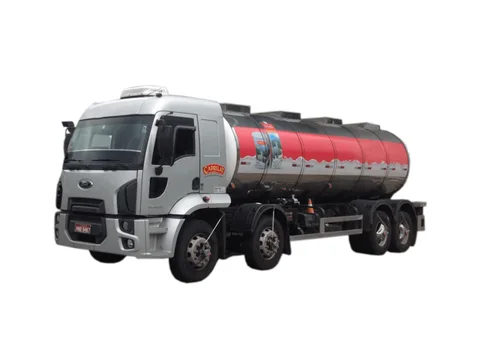
When the milk arrives at our plant, it is tested and undergoes strict quality checks. It is then unloaded into stainless steel tanks, stored, and used to make our products: Caprilat Pó, Caprilat UHT, and Goat Milk Butter.
Now that you know a little more about Caprilat goat milk, why not give it a try? We're sure you'll love it!
Not sure where to buy it? Just click here to find the store nearest you.